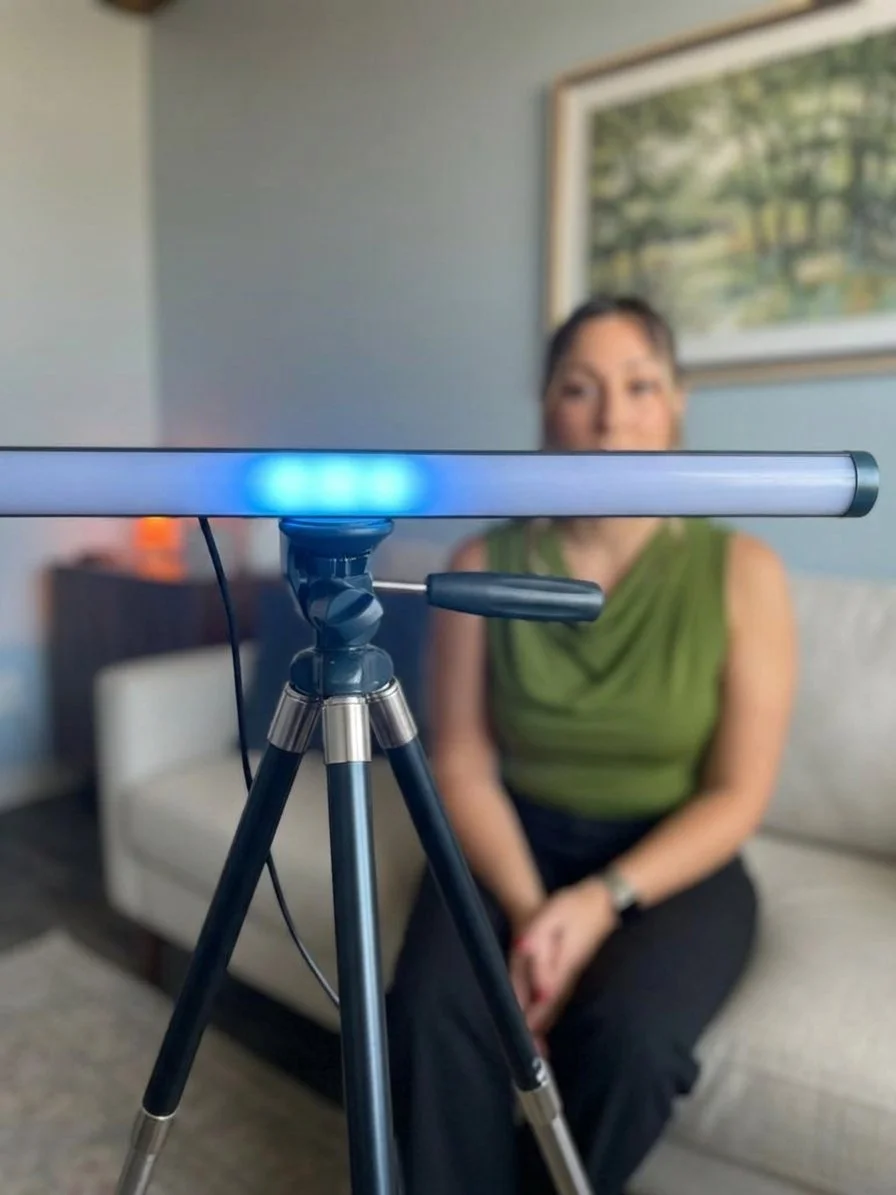
OMG you heard about EMDR! yay.. and you probably have a lot of questions you are dying to know about this mysterious therapy thing. Maybe you've heard that EMDR can help with trauma, anxiety, or painful relationship experiences. Maybe a friend recommended it. Or maybe you've been doing traditional talk therapy for a while and are wondering whether something different might help.
But how do you know if the EMDR therapist you're considering is actually qualified? What kind of training should they have? How do you know if they're experienced with your particular concerns? And what should you expect when you start?
As a Certified EMDR therapist, I think these are really important questions to ask before getting started.
I'm also someone who has personally experienced EMDR as a client. I know what it's like to sit on the other side of the room, not knowing exactly what to expect or whether the therapist in front of you is going to be a good fit.
One thing I want you to know is that not all EMDR therapists approach treatment the same way. Training, clinical experience, specialization, and the relationship you build with your therapist all matter.
Here are seven questions I would encourage you to ask before starting EMDR therapy.
1. Are you trained in EMDR through an EMDRIA-approved training program?
Let's start with the basics. Before you get into someone's therapeutic approach or experience, find out what kind of EMDR training they've completed.
I would look for a therapist who has completed an EMDRIA-approved basic training program.
EMDRIA stands for the EMDR International Association. It's the professional association that establishes standards for EMDR training, continuing education, and professional credentials. It also maintains a directory where you can find EMDR therapists and approved training providers.
You can ask:
Did you complete an EMDRIA-approved basic training?
Are you currently receiving EMDR consultation?
Are you EMDRIA certified?
These questions matter because there is a difference between being EMDR-trained and being EMDRIA-certified.
EMDR-trained vs. EMDRIA-certified
Completing an EMDRIA-approved basic training provides clinicians with the foundational knowledge and skills to practice EMDR. The training includes instruction, supervised practice, and consultation.
EMDRIA certification is a separate, voluntary credential that requires additional clinical experience, consultation, continuing education, and professional recommendations.
Certification isn't required to practice EMDR, but it does demonstrate that a therapist has pursued additional professional development beyond basic training.
Personally, I think ongoing consultation is a really good sign.
When therapists participate in consultation, they're discussing their clinical work with more experienced EMDR professionals, receiving feedback, and getting guidance on how to approach different situations. They're continuing to develop their skills rather than relying solely on what they learned during their initial training.
If I were helping a friend find an EMDR therapist, I would prioritize someone who completed an approved basic training and is actively seeking consultation. Certification would be another positive indicator.
You can verify training providers and explore therapist credentials through the EMDR International Association.
2. Have you worked with the particular issue I'm coming to therapy for?
This is one of the questions I think people overlook.
It's one thing for a therapist to say they offer EMDR. It's another thing for them to have experience using EMDR with the specific concerns you're bringing into therapy.
For example, are you looking for help with:
Childhood trauma or difficult family experiences?
Relationship anxiety or anxious attachment?
A painful or unexpected breakup?
Betrayal or infidelity?
Panic attacks?
Fear of flying or other specific fears?
Experiences of emotional or sexual abuse?
These concerns can involve very different experiences, treatment considerations, and clinical needs.
A therapist might have extensive experience using EMDR for one type of trauma but very little experience working with attachment wounds or complicated relationship dynamics.
That's why I would ask:
Have you worked with clients who have experienced something similar?
How do you typically approach EMDR for this particular concern?
Have you completed additional training related to this issue?
Why attachment-focused EMDR experience matters
This is particularly important if you're seeking therapy for relationship problems, attachment wounds, or a difficult breakup.
I'm personally very interested in attachment-informed EMDR. It's an area that requires additional learning beyond basic EMDR training.
Basic EMDR training provides a foundation for understanding and practicing EMDR, but it doesn't cover everything there is to know about attachment, early relational experiences, and how those experiences can influence adult relationships.
For example, someone struggling after a breakup might not just be processing the loss of a particular relationship. They might also be experiencing feelings connected to earlier experiences of abandonment, rejection, emotional neglect, or not feeling important to the people they loved.
Those experiences can become intertwined.
When working with relationship-related concerns, I think it's valuable to find a therapist who has pursued additional education in attachment and relational trauma.
Some examples of specialized approaches and training to explore include DNMS (Developmental Needs Meeting Strategy) and training through Laurel Parnell's attachment-focused EMDR work.
You can also ask whether the therapist has experience using specific EMDR approaches for breakup-related distress.
There is a lot more to working through a breakup than simply identifying the most painful memory and processing it. If someone is leaving an emotionally abusive or unhealthy relationship, for example, there may be additional experiences, relationship patterns, and emotional barriers that need attention.
You want someone who understands the bigger picture.
3. What happens before we actually start processing memories?
This is probably one of my biggest recommendations.
Ask your therapist what the first few sessions will look like and how they determine when someone is ready to begin EMDR processing.
I know that when people seek EMDR, they often want to get started immediately. They might have been struggling with something for years and finally feel hopeful that they've found a treatment that can help.
I understand that. But I don't believe good EMDR therapy should be rushed.
EMDR is a very relational process. Before I begin reprocessing memories with someone, I want to establish a sense of safety and understand who I'm working with.
That means getting to know their history, understanding their presenting concerns, and identifying what we actually need to work on.
For me, that includes exploring attachment history and family-of-origin experiences when they're relevant. I want to understand how someone learned to navigate relationships, what experiences have shaped their beliefs about themselves, and how those experiences might connect to what they're currently struggling with.
I also want to narrow down the specific memories or experiences we may eventually target.
Preparation is part of the work.
During those early sessions, I also introduce skills and resources that can help someone manage emotions and stay present during processing.
Some examples include:
Developing a calm place or another grounding resource.
Practicing the light stream exercise.
Identifying nurturing, protective, and wise figures, if those feel appropriate to the client.
Practicing staying present while noticing thoughts, feelings, and physical sensations.
Beginning with a smaller, more manageable experience rather than immediately targeting someone's most painful memory.
One thing I pay attention to is whether someone can maintain what's called dual attention.
Essentially, this means being able to notice what's happening internally while also maintaining awareness of the present moment and the fact that they're here with me, in the therapy room.
That ability is important during EMDR processing.
I don't want someone to feel like they're being thrown into an experience they're not prepared to navigate.
Questions to ask your therapist:
How do you prepare clients before starting EMDR?
Will we spend time discussing my history and current concerns?
How do you determine whether I'm ready to begin processing?
What happens if I need more time to develop coping skills?
If a therapist can't explain their preparation process or seems eager to jump straight into processing without understanding your history, I would want to explore that further.
4. What happens if I become overwhelmed during EMDR?
This is a question I really want people to feel comfortable asking.
EMDR can bring up emotions, memories, and physical sensations that may be uncomfortable. But that doesn't mean you should feel pressured to push through something that feels unmanageable.
A good therapist should be paying attention to how you're responding throughout the process.
For example, if I notice someone is having difficulty tolerating emotions, becoming dysregulated, or experiencing significant distress about feeling dysregulated, I may decide that we're not ready to continue processing.
Instead, we might return to preparation, work on emotional regulation, or focus on helping that person feel safer and more grounded.
There is no reason to force the process.
I also think it's important to know that you have a say in what happens during your sessions. You can communicate that something feels too intense, ask to slow down, or request a pause.
Your therapist should be responsive to that.
Ask about alternative approaches and techniques.
There are also different techniques that may be considered when directly engaging with a memory feels too overwhelming.
For example, the FLASH Technique is an approach that can be used to help reduce the distress associated with difficult memories without requiring the person to focus on the full details of the memory in the same way as traditional processing.
It may be worth asking whether your therapist has training in FLASH and whether they believe it could be appropriate for your situation.
Other EMDR techniques can help create distance from difficult material or change how someone engages with a memory.
The important thing is that your therapist understands how to adapt their approach.
You shouldn't feel like you have to tolerate an overwhelming experience just to prove that you're doing EMDR correctly.
5. What might I experience during and after an EMDR session?
If you've never experienced EMDR, you might have an idea of what you think it's supposed to feel like.
Maybe you expect to cry. Maybe you think you'll experience a huge emotional release. Or maybe you're worried that you'll leave therapy feeling completely overwhelmed.
The reality is that people respond differently.
During EMDR processing, some people experience:
New insights or connections between experiences.
Emotions they haven't felt in a while.
Changes in how they think about a particular memory.
Physical sensations, such as tightness or sensations in the chest, throat, or head.
Memories, thoughts, or associations that seem to come up unexpectedly.
Not everyone has a dramatic emotional response. Some people experience subtle shifts or insights rather than intense emotions.
There isn't one correct way to experience EMDR.
What about after the session?
Some people feel tired or notice lower energy after a session. Others feel relatively normal and go about their day without much difficulty.
Most of my clients leave sessions feeling okay. Before ending a processing session, I want to make sure someone is feeling sufficiently grounded and regulated.
I also encourage people to give themselves a little breathing room afterward.
My personal recommendation? Have a popcorn-and-movie night.
Seriously.
You don't need to schedule something demanding immediately after an EMDR session. Give yourself permission to take it easy, do something relaxing, and practice a little self-care.
You might want to:
Have a relaxing evening at home.
Watch a movie or favorite show.
Get some rest if you're tired.
Spend time doing something comforting.
Avoid overloading your schedule if you can help it.
You can also ask your therapist what they recommend between sessions and what to do if something unexpected comes up.
6. How will I know if we're a good fit?
I think this is just as important as someone's training and credentials.
You can find a therapist with impressive qualifications, years of experience, and multiple certifications. But if you don't feel comfortable with that person, the work may be much harder.
I want you to feel like you can tell your therapist when something is difficult.
You should be able to say things like:
I'm nervous about doing this.
I don't understand what we're doing.
That feels like too much right now.
I'm having a hard time staying focused.
I don't think I'm ready to work on that memory.
Your therapist doesn't have to make every session comfortable. Therapy can be uncomfortable, especially when you're discussing experiences you haven't talked about before.
But you should feel that your therapist is patient, curious, reassuring, and willing to accommodate your needs.
My personal experience as an EMDR client
I learned this lesson firsthand.
When I was looking for my own EMDR therapist, I had an experience that really shaped how I think about the therapeutic relationship.
During my very first session, within about 30 minutes of meeting the therapist, I was asked to create a list of the ten worst experiences in my life.
I hadn't gone into that appointment expecting to do that. I wasn't prepared for it, and I didn't feel like we had established enough of a relationship for me to jump into something so personal.
Toward the end of the session, the therapist attempted to introduce a safe-place exercise, but the process felt rushed.
When I had difficulty concentrating, she suggested that EMDR might not work for me and that perhaps I needed to see someone in person.
What bothered me most wasn't that I found the exercise difficult. It was how dismissive and impatient the interaction felt.
I walked away feeling like I was somehow not a good fit for the therapist, rather than feeling like we could work together to figure out what I needed.
And that's something I think about in my own work.
People don't need to show up to their first session knowing exactly how to do everything. They shouldn't feel like they're failing because they're nervous, uncomfortable, or having difficulty with an exercise.
A good therapist should be curious about what's happening and willing to work with you.
If you're interviewing an EMDR therapist, pay attention to how you feel during that initial conversation. Do you feel heard? Do they answer your questions? Do they seem interested in understanding your experience?
You deserve a therapist who treats you like a person, not a protocol.
7. How long does EMDR therapy take, and what if I need more time?
I think it's important to have realistic expectations before starting EMDR.
One thing I want people to understand is that processing experiences takes time.
You might have heard stories about someone completing EMDR in just a few sessions. While some people may experience meaningful progress relatively quickly, that doesn't mean everyone will have the same experience.
It depends on what you're working through, how many experiences are connected to the presenting concern, your history, and what comes up during treatment.
For example, if you're working through a relatively specific experience, the process may look very different from someone who is addressing years of childhood trauma, attachment wounds, or repeated experiences of relational hurt.
How many EMDR sessions will I need?
There isn't a universal number.
For some people, working through a particular target may take several sessions. It might be six, seven, or ten sessions, for example. For others, it may take more or less time.
And remember, those numbers refer to the work involved in processing a particular concern, not necessarily the entirety of someone's therapy.
If you're attending traditional 50-minute sessions, you may also need to account for the time spent checking in, preparing, and closing the session.
What about EMDR intensives?
Some therapists offer extended EMDR sessions, such as 90-minute appointments or longer intensives.
Having additional time can allow for longer periods of focused work and may reduce some of the interruptions that happen when you're working within a traditional 50-minute appointment.
However, longer sessions don't guarantee that everything will be resolved in one appointment.
Even with 90-minute sessions, you may need several appointments to work through a particular concern.
Consistency and pacing matter, too. When sessions are spread out with long gaps in between, you may experience more stopping and starting.
I would ask your therapist:
What is your general approach to treatment planning?
How do you determine when a target has been sufficiently processed?
Do you offer extended sessions?
How frequently do you recommend scheduling EMDR?
What happens if we discover additional experiences that need attention?
Most importantly, don't go into EMDR expecting to resolve years of experiences in three or four sessions.
Give yourself permission to take the time you need.
A final thought: Choose the therapist, not just the treatment.
If there's one thing I hope you take away from this article, it's that finding an EMDR therapist is about more than finding someone who knows how to use bilateral stimulation.
You want someone who understands the experiences you're bringing into therapy, has the appropriate training, and knows how to adapt the process to your needs.
You want someone who is willing to slow down, answer your questions, and help you feel safe enough to do the work.
EMDR can be a meaningful part of working through painful experiences, but the therapist you work with matters.
If you're considering EMDR, take your time finding someone you feel comfortable with. Ask questions. Talk about your concerns. And remember that you don't have to know exactly what you're doing before you walk into your first session.
That's what therapy is for.
Looking for an EMDR Therapist in Long Beach, CA?
I'm Nicole Braswell, LMFT, an EMDR-trained therapist in Long Beach, California. At Just Therapy LBC, I work with adults navigating relationship difficulties, attachment wounds, unexpected breakups, betrayal, and experiences that continue to affect how they feel about themselves and their relationships.
My approach is relational, collaborative, and attachment-informed. I don't believe in rushing people into processing their most painful experiences. I want to understand your history, help you develop the resources you need, and create a treatment approach that makes sense for you.
If you're curious about whether EMDR might be a good fit, I'd love to talk with you.
Learn more about EMDR therapy in Long Beach or reach out to schedule a consultation.